CCeMMP Seminar Series – Dr. Melanie Dietrich – 25 August 2026
August 26, 2026
Past Seminars
You are using an out of date browser. For the best experience on this site and added security, please update to a modern browser.
Update your browser
The Australian Research Council Centre for Cryo-Electron Microscopy of Membrane Proteins (CCeMMP) is holding their 3rd Annual ‘Bench to Art’ Exhibition to showcase the artistic flair of structural biologists in a virtual exhibition during National Science Week. Our goal is to share stories of exploration and discovery in structural biology with the broader community. Access and view the 2026 gallery here.
First Prize for Still and Animation were selected by our panel of expert Judges who assessed the submissions for their creativity, originality, technique and impact on the viewer. It was a very tough year for our judges with the high calibre of stills and animations that were submitted, showing off the amazing creative flair of researchers around the world!
We thank the Judges for their expertise and generosity for supporting our 2026 art exhibition for National Science Week. Meet them below!
Dr. Amy Chen is a science communication professional with a PhD in pharmacology. With an extensive career in the university sector, Amy is an expert in youth advertising, web content development with a user experience focus, and science communication. She is currently a Senior Marketing and Communications Coordinator at Monash University.
Dr. Jeroen Claus is the founder of the award-winning biomedical animation studio Phospho, based in the Netherlands and the UK. His scientific background is in the structure/function relationships of (pseudo)kinases, but he has reluctantly come to admit that other PTMs can be interesting too.
Molly Patton is the founder of Miscible, a Melbourne-based science communication creative agency built on the idea that science and the arts were never meant to be separate, and that the research that truly reaches people is almost always the research that weaves rigorous findings with human emotion.
Edward Twomey is an Associate Professor of biophysics and biophysical chemistry at the Johns Hopkins University School of Medicine. His lab studies how cells communicate with each other at junctions using technologies like cryo-electron microscopy, cryo-electron tomography, and electrophysiology.
In this striking visual metaphor, mycobacteriophages are reimagined as delicate yet resilient wildflowers, symbolizing their intricate relationship with Mycobacteria. Emerging from a rugged, rocky terrain that represents the formidable mycobacterial cell envelope, these phage-inspired blooms highlight the elegance of viral evolution in overcoming bacterial defenses. For millions of years, mycobacteriophages and Mycobacteria have been locked in a continuous evolutionary arms race, shaping each other through cycles of infection, resistance, and adaptation.
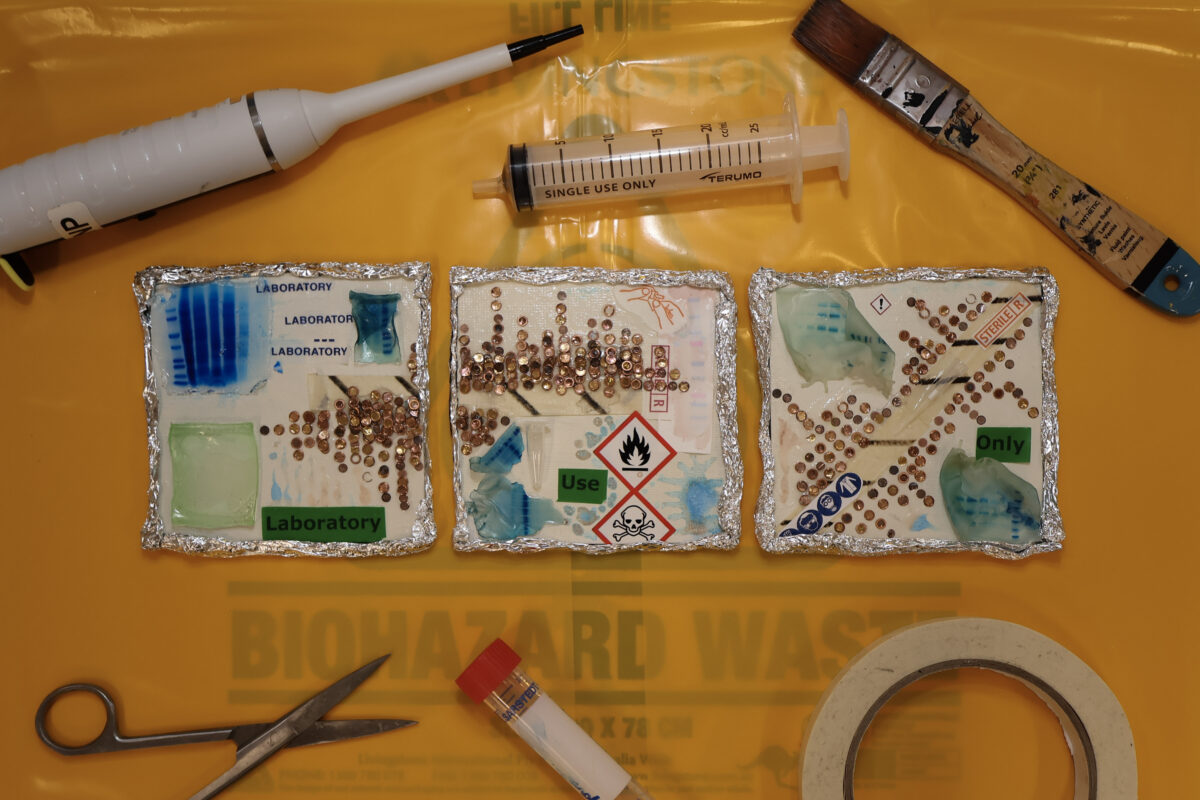
What happens after your sample becomes waste?
Computer-modelled structures get all the glory, while the friends we made along the way are left to rot and fester. This work is comprised of old membranes, foil, autoclave tape, dried SDS and agarose gels, piles of used cryo-EM grids, reagent stickers and consumable cutouts, with Coomassie and Bradford dye stains.
Representing hours upon hours of work amassed by the students and researchers of the CCeMMP collective, Wasteland is an ode to structural biology, sung from the depths of the biohazard bin.
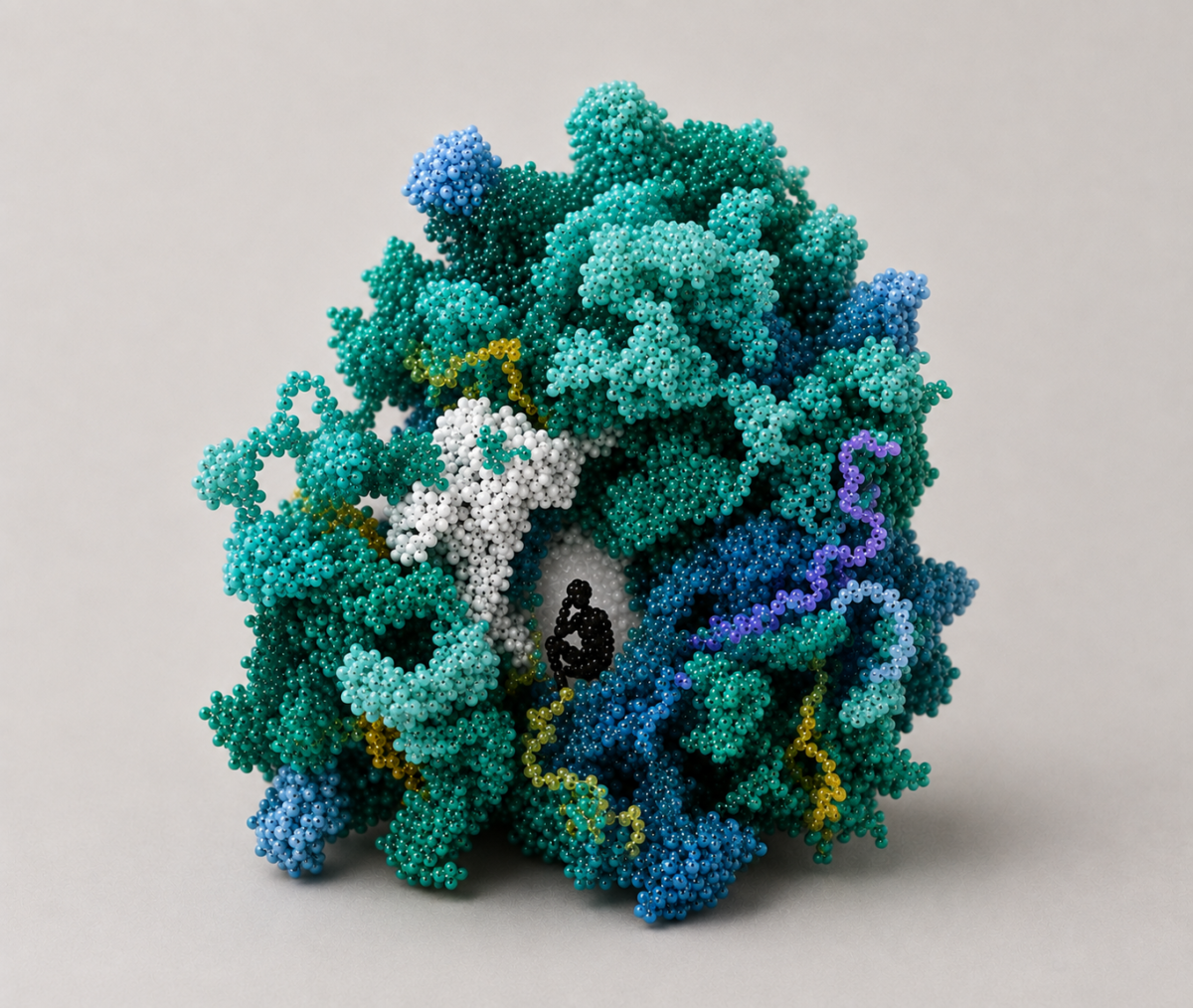
Ribosomes are among the most complex molecular machines in the cell, and revealing their structure has required decades of advances in structural biology. We use cryo-EM to uncover how they translate the genetic code into proteins across many organisms in both health and disease. This piece reimagines the ribosome as a tangible item that we can physically explore. The tiny seated figure represents our curiosity—and occasional confusion—as we piece together intricate structural details to better understand one of life’s most essential machines.
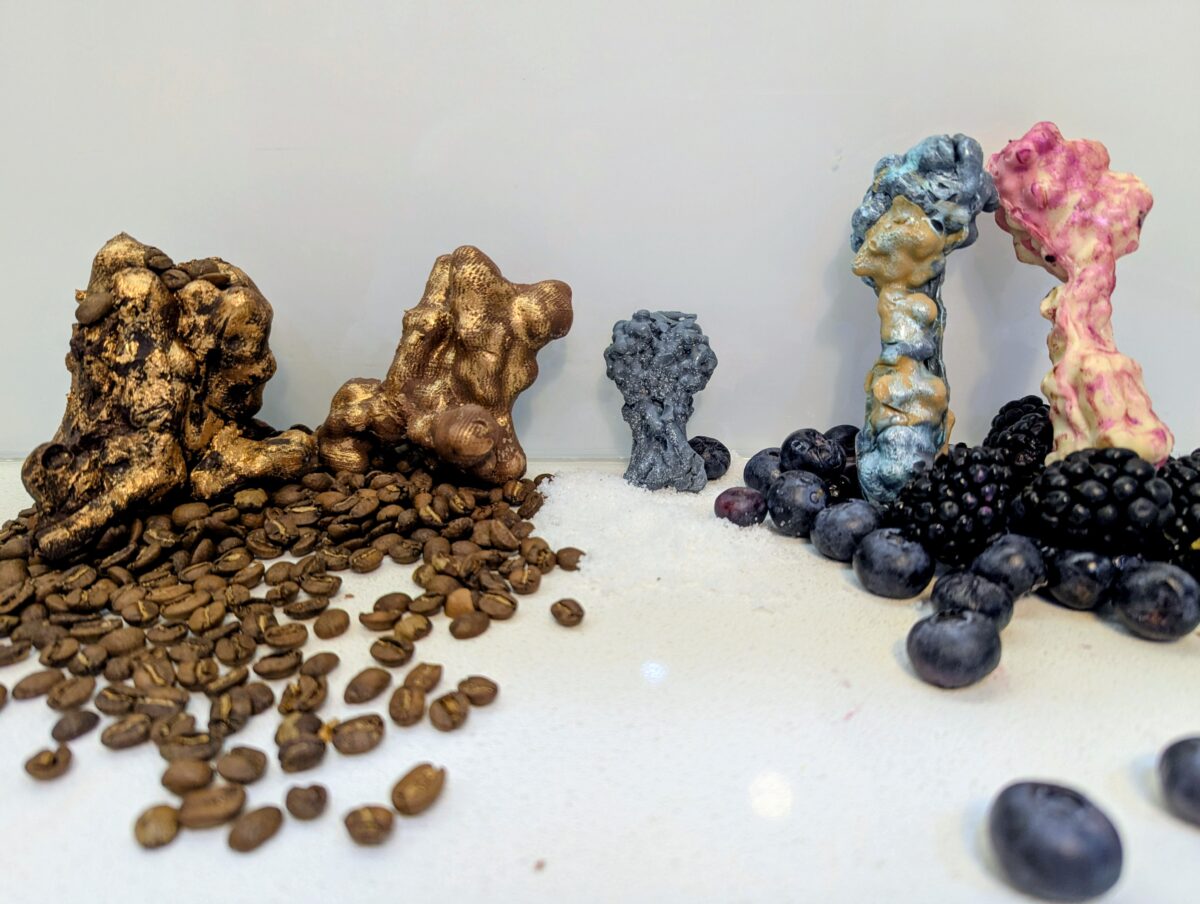
Aka. Life is like a box of chocolates; you always know what structure you’re going to get.
Handmade and decorated chocolate sculptures of various membrane protein receptors and their tasty ligands.
Envision a fictitious Museum of Molecular Arts (MoMA) where structures of proteins are displayed in artistic manner to explore and interact with. They are shown as gigantic installations that almost let you feel like a small molecule next to them. The video highlights a special exhibition focusing on molecular machines – protein complexes that involve distinct conformational changes to fulfil their task in the cell. This draws on the beauty and power of biological structures for education and our deeper understanding of nature.
This video shows the assembly and function of the Salmonella bacterial flagellar motor, one of the most remarkable molecular machines in biology. Each major protein is labeled, along with the experimental or computational method used to determine its structure.
De novo binders designed to recognise human membrane proteins using ProteinDJ.
The People’s Choice award for Still and Animation are determined by the votes of our supportive community from around the world! Everyone was asked to vote for their personal favourite Still and Animation. We thank everyone for their votes and engagement with our 2026 art exhibition!
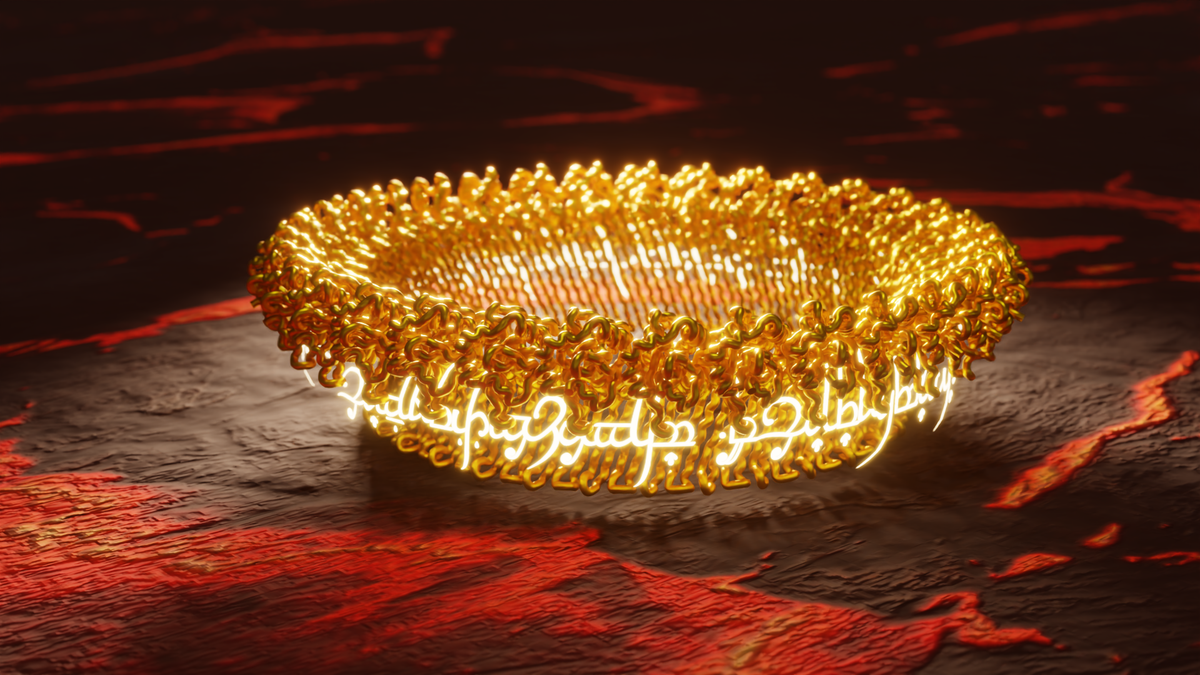
Inspired by the iconic One Ring from The Lord of the Rings, this artwork celebrates the remarkable molecular architecture of gasdermin- a pore-forming protein that plays a central role in innate immunity. When activated, gasdermin assembles into a ring-shaped pore that punctures the membranes of infected or damaged cells, releasing inflammatory signals and initiating programmed cell death to help eliminate threats. While Tolkien’s ring was forged for domination, gasdermin’s ring is forged for defence, where the sacrifice of a single cell protects the host as a whole.
Ribosomes are among the most complex molecular machines in the cell, and revealing their structure has required decades of advances in structural biology. We use cryo-EM to uncover how they translate the genetic code into proteins across many organisms in both health and disease. This piece reimagines the ribosome as a tangible item that we can physically explore. The tiny seated figure represents our curiosity—and occasional confusion—as we piece together intricate structural details to better understand one of life’s most essential machines.
What happens after your sample becomes waste?
Computer-modelled structures get all the glory, while the friends we made along the way are left to rot and fester. This work is comprised of old membranes, foil, autoclave tape, dried SDS and agarose gels, piles of used cryo-EM grids, reagent stickers and consumable cutouts, with Coomassie and Bradford dye stains.
Representing hours upon hours of work amassed by the students and researchers of the CCeMMP collective, Wasteland is an ode to structural biology, sung from the depths of the biohazard bin.
This video shows the assembly and function of the Salmonella bacterial flagellar motor, one of the most remarkable molecular machines in biology. Each major protein is labeled, along with the experimental or computational method used to determine its structure.
Envision a fictitious Museum of Molecular Arts (MoMA) where structures of proteins are displayed in artistic manner to explore and interact with. They are shown as gigantic installations that almost let you feel like a small molecule next to them. The video highlights a special exhibition focusing on molecular machines – protein complexes that involve distinct conformational changes to fulfil their task in the cell. This draws on the beauty and power of biological structures for education and our deeper understanding of nature.
This is a reconstruction of Drosophila thick filament showing flightin in red and myosin backbone and heads are in grey. made in Chimerax.
The Wildcard Prize was a special vote from the CCeMMP Executive and core teams who established and expanded the Centre community.
Ribosomes are among the most complex molecular machines in the cell, and revealing their structure has required decades of advances in structural biology. We use cryo-EM to uncover how they translate the genetic code into proteins across many organisms in both health and disease. This piece reimagines the ribosome as a tangible item that we can physically explore. The tiny seated figure represents our curiosity—and occasional confusion—as we piece together intricate structural details to better understand one of life’s most essential machines.